


What is Validity in User Research, and Why It's the Foundation of Confident Design
In User Research, getting data is easy; getting valid data is the true challenge. Validity is the bedrock of trustworthy insights. It answers the fundamental question: Are we measuring what we think we're measuring, and can we trust the results?
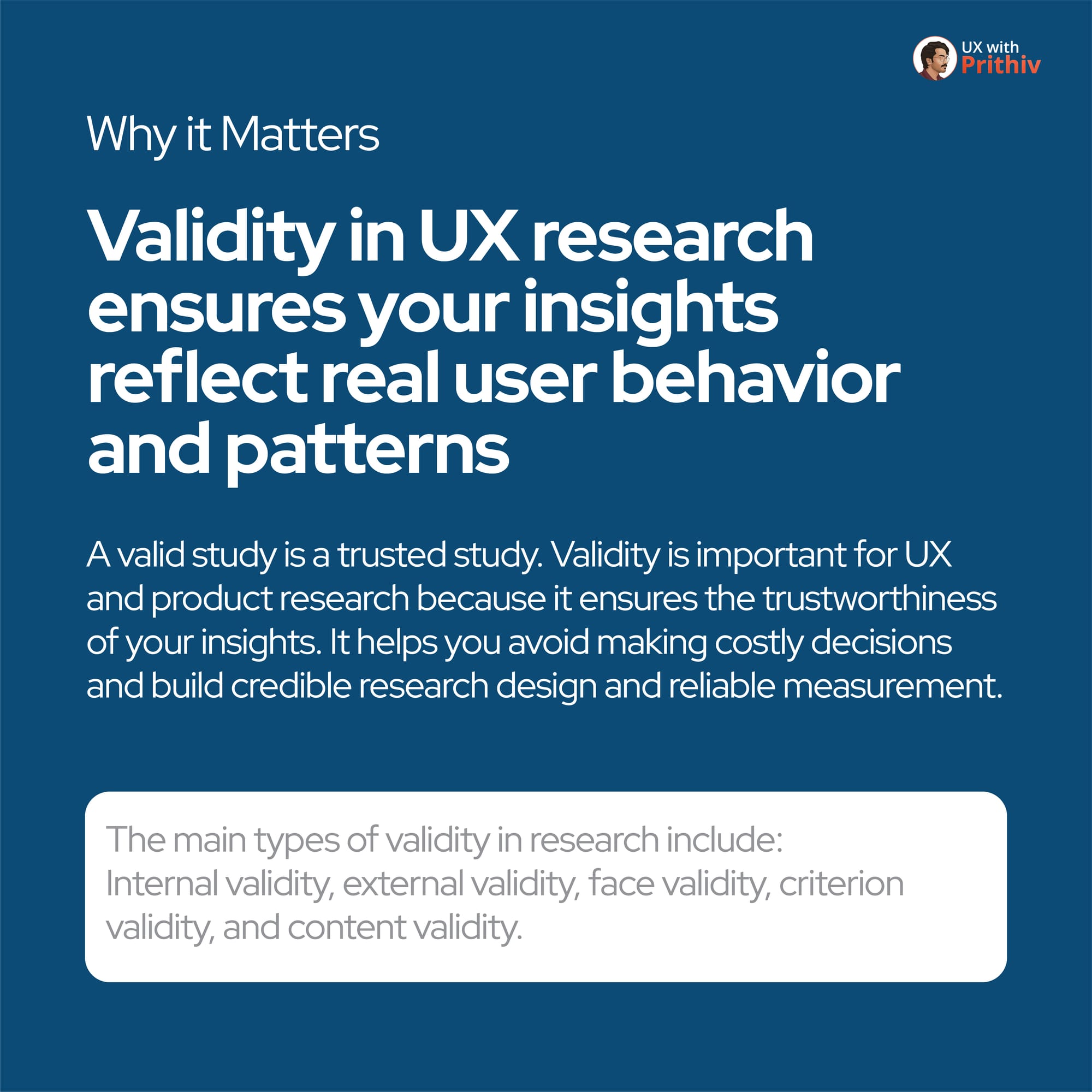
A valid study is a trusted study. Prioritizing validity ensures your findings reflect real user behaviour and patterns, directly preventing costly design and product mistakes.
Section 1: Decoding Validity in UX
Validity in UX research ensures your insights reflect real user behavior and patterns. If your research isn't valid, you're designing based on flawed assumptions, which erodes stakeholder trust and leads to wasted development resources.
The main types of validity that UX professionals focus on include:
- Internal Validity: The degree to which a study establishes a cause-and-effect relationship. (Are the changes in user behavior directly due to the change we made, or something else?)
- External Validity: The extent to which your results can be generalized to the entire user population. (Does this small group of users truly represent the millions of people who will use our product?)
- Content Validity: The extent to which a test measures all relevant aspects of the research topic. (Did our survey questions cover the full scope of the user's journey?)
Section 2: The Critical Importance of Validity
Validity is the bridge between a research session and a successful design decision. It provides:
- Credible Insights: A valid study builds credible research design and reliable measurement.
- Stakeholder Trust: Credible insights lead to stakeholder trust, as decisions are backed by data that accurately represents reality.
- Confident Design: With trusted data, designers can move forward with confident, evidence-based solutions, avoiding costly decisions based on guesswork.
Section 3: Practical Steps to Boost Your Study's Validity
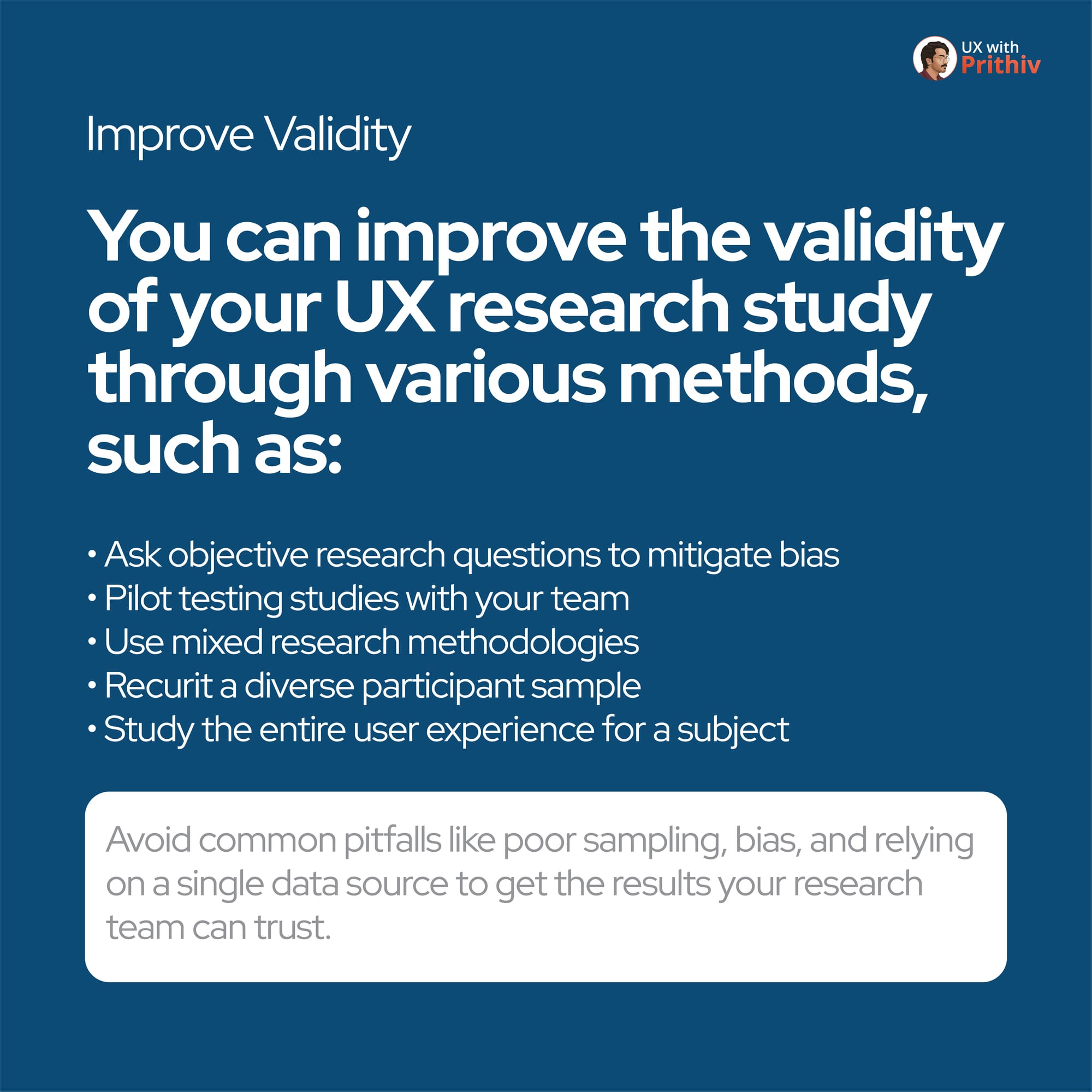
You can improve the validity of your UX research through various methods. Here are a few actionable strategies:
- Mitigate Bias with Objective Questions: Ensure you ask objective research questions to mitigate researcher or participant bias.
- Pilot Test Studies: Always pilot test your studies with your team to catch flaws in the protocol, language, or flow before engaging real participants.
- Use Mixed Methodologies: Do not rely on a single data source. Using mixed research methodologies (e.g., combining quantitative analytics with qualitative interviews) triangulates your data for stronger validation.
- Recruit a Diverse Sample: Recruit a diverse participant sample to strengthen external validity and ensure your findings generalize to a broader audience.

By avoiding common pitfalls like poor sampling and relying on a single data source, you ensure the trustworthiness of your findings.


Comments