


Navigating the world of UX research can feel like learning a new language. You hear terms like Quantitative, Qualitative, Attitudinal, and Behavioral—but which one do you use, and when?
Understanding these four core research types is the key to moving beyond assumptions and designing with real user confidence.
Type 1: Qualitative Research (The "Why")
This type is all about getting the rich, deep insights behind user actions.
- Focus: Get the "why" behind user actions; hear real thoughts and feelings.
- Methods: Interviews, focus groups, or diary studies.
- Great for: Deep insights and understanding complex user motivations.
Type 2: Quantitative Research (The "What" and "How Much")
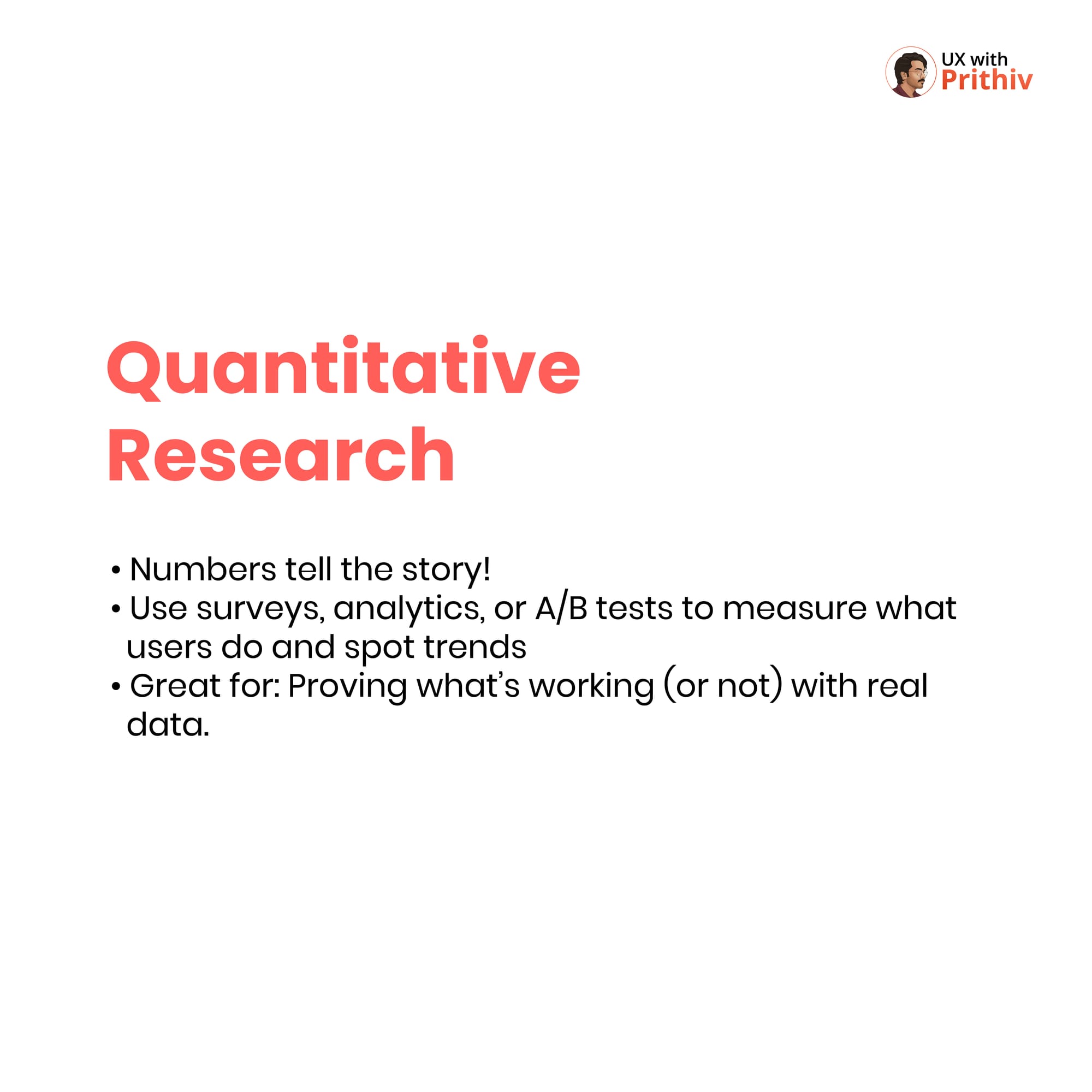
Quantitative research makes the data measurable, allowing numbers to tell the story.
- Focus: Measure what users do and spot measurable trends across a large group.
- Methods: Surveys, analytics, or A/B tests.
- Great for: Proving what's working (or not) with real, objective data.
Type 3: Attitudinal Research (What Users Say)
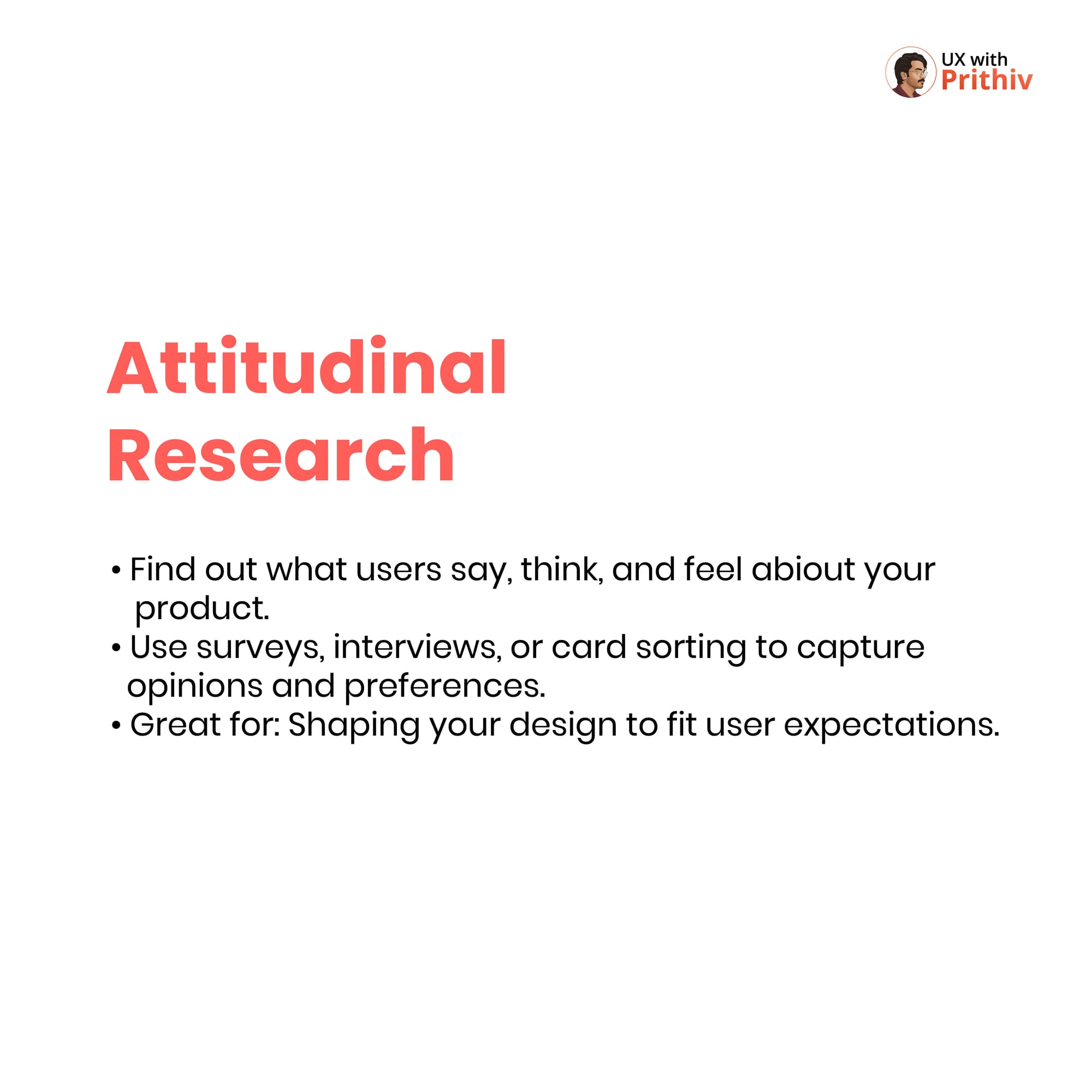
Attitudinal methods capture self-reported user perceptions, opinions, and preferences.
- Focus: Find out what users say, think, and feel about your product.
- Methods: Surveys, interviews, or card sorting.
- Great for: Shaping your design to fit user expectations and preferences.
Type 4: Behavioral Research (What Users Do)
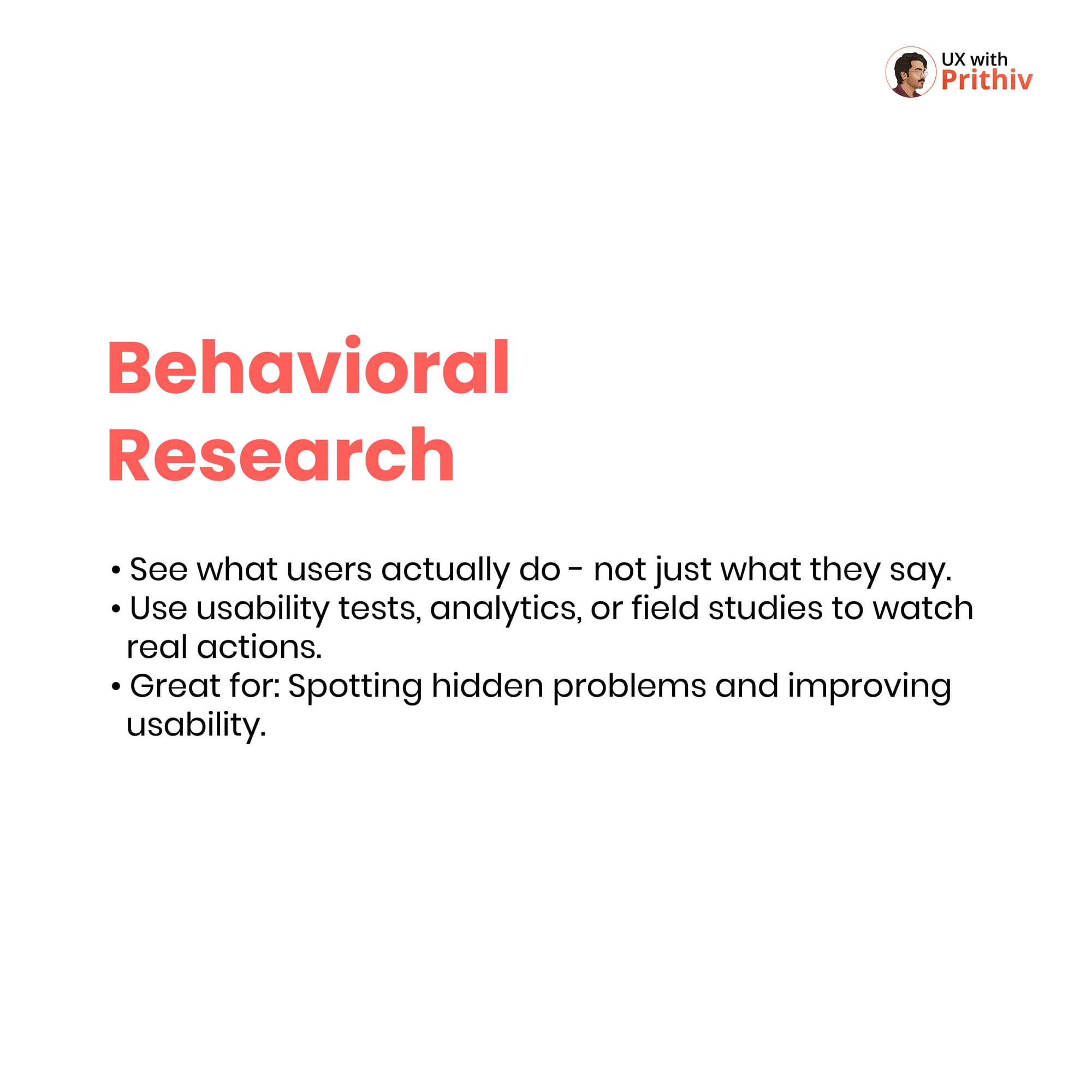
This type focuses on observing and analyzing user actions, contrasting what they say versus what they actually do.
- Focus: See what users actually do—not just what they say.
- Methods: Usability tests, analytics, or field studies.
- Great for: Spotting hidden usability problems and improving the functional flow.
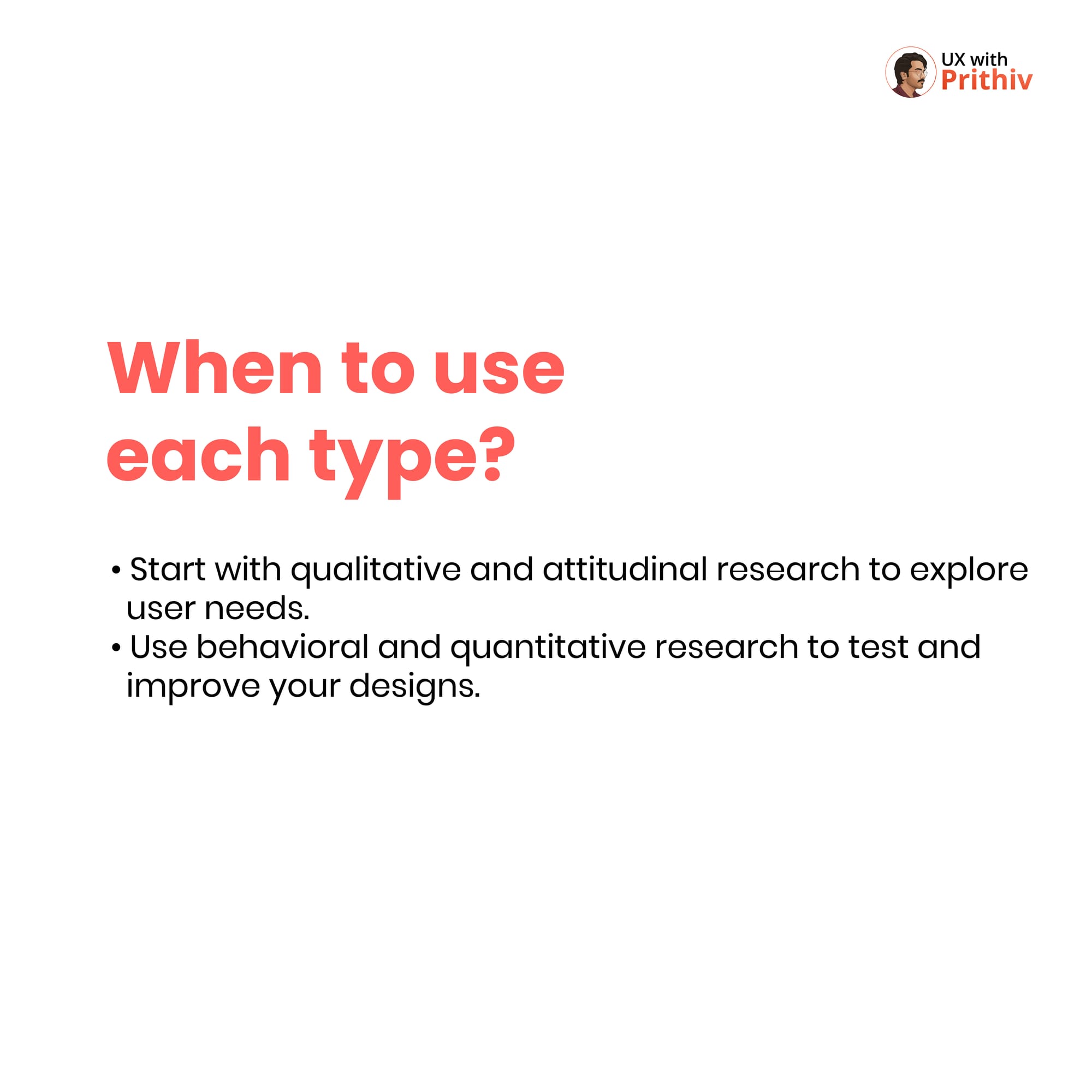
Pro Tip: When to Use Each Type
The most effective research combines them:
- Start with Qualitative and Attitudinal research to explore user needs and understand the problem space.
- Use Behavioral and Quantitative research to test, measure, and refine your designs.
Mixing and matching these types gives you a full picture of the user—what they do, why they do it, and how they feel.


Comments