


In UX, we spend countless hours perfecting the experience for our ideal users—our "Sarahs and Johns". We design flows that are easy to use and solve their core problems. But what about the users who will try to break into your system, hack it, or misuse it in an undesirable way?.
Ignoring this adversarial mindset is a costly design flaw. Introducing the Anti-Persona: a powerful tool to future-proof your product against malicious intent and unintended consequences.
Introducing the Anti-Persona
Anti-personas represent those who will misuse your system or hurt the business. They bring immediate awareness to critical risks and challenges, such as security, abuse, or moderation problems.
Their role in the design process is not to be a user, but to be an objective lens for risk assessment.
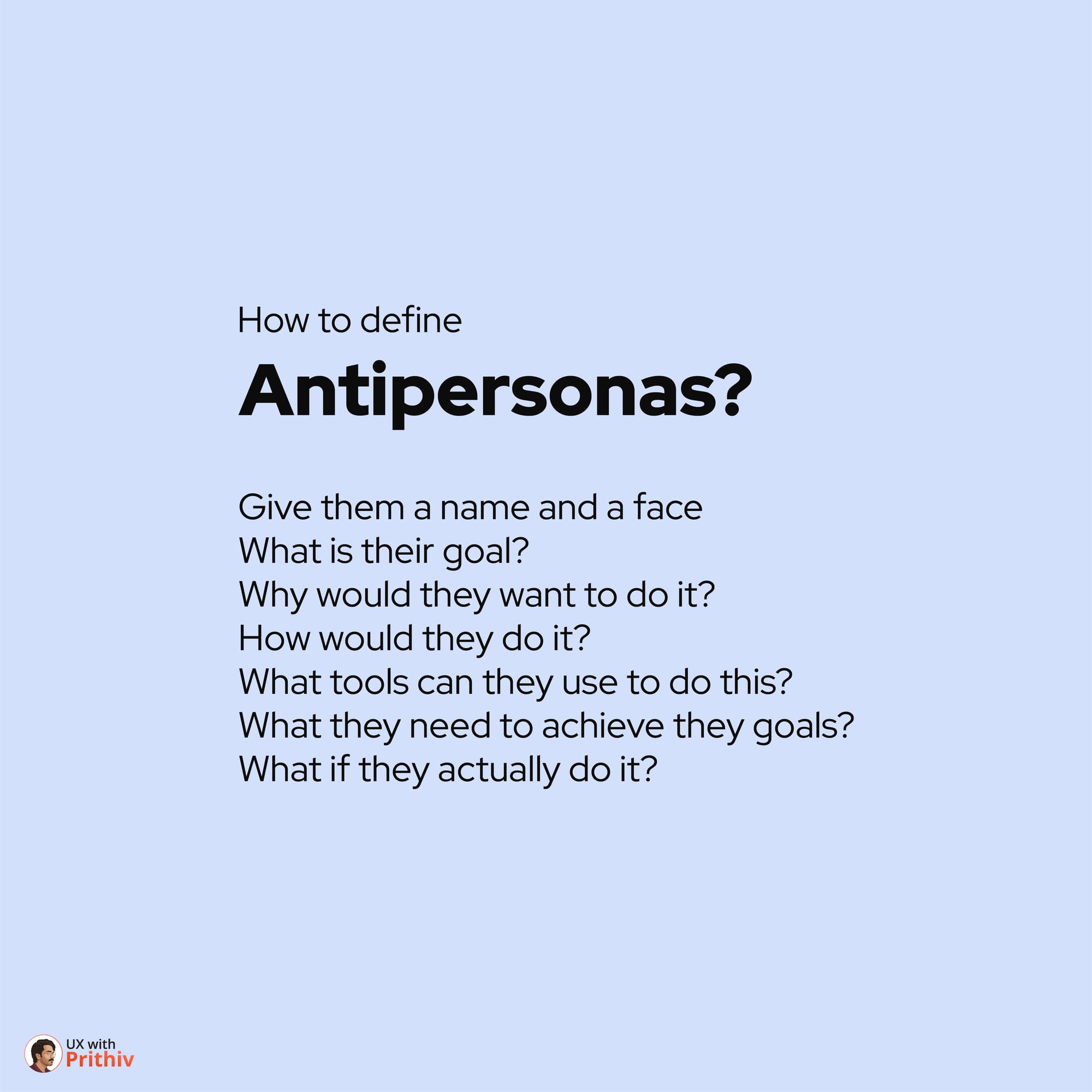
How to Define Your Anti-Persona (Asking the Hard Questions)
Defining an anti-persona requires flipping the script on traditional empathy mapping:
- Give them a Name and a Face: Even if you don't use it publicly, personifying the threat helps your team visualize the risk.
- Define Their Goal: What are they trying to achieve (e.g., steal data, spread misinformation, commit fraud)?.
- Define the "How": How would they execute this goal? What vulnerabilities would they exploit?.
- Identify Tools: What existing tools or methods might they use to achieve their goals?.
- Assess Impact: What if they actually succeed? What is the cost to the user and the business?.
How to Present Anti-Persona Insights to Stakeholders
The biggest benefit of the anti-persona is better stakeholder communication. You must frame risks as concrete challenges with clear solutions.
- Challenge/Risk: Spreading fake news using our platform.
- Actions/Solutions: Implement moderation queues, flag suspicious content, or require content approval before posting.
When you present the risk, use an analogy: "Imagine a person that wants to use social media to spread fear; they could use our system easily to spread it, so we need ways to stop them before they start". This shifts the conversation from a theoretical security concern to a visible, urgent threat.


Comments