


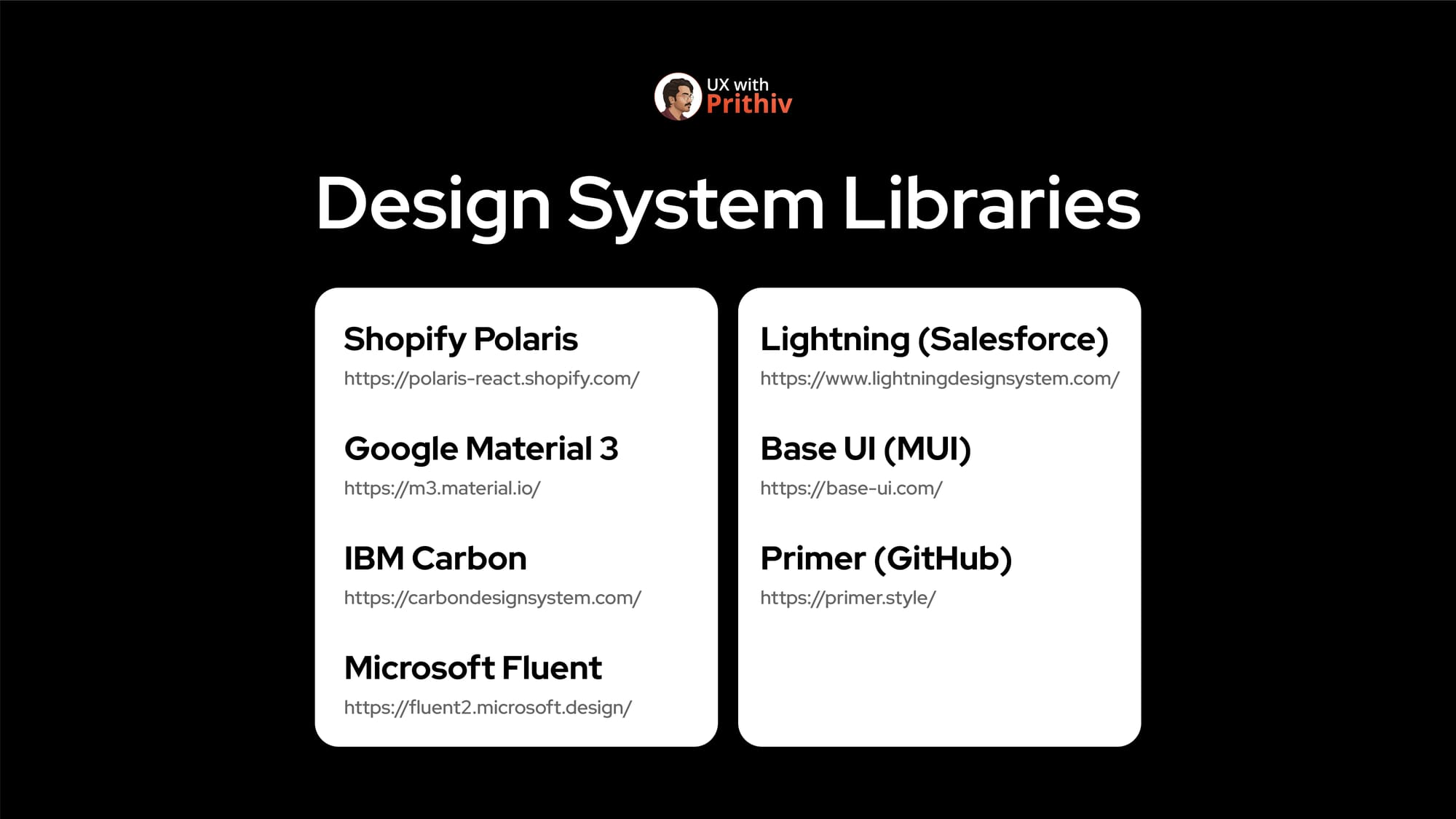
A Design System is the single source of truth that allows products to scale efficiently, maintain brand consistency, and drastically speed up development. For designers and developers, familiarity with established, open-source Design System Libraries is non-negotiable. These frameworks represent years of best-practice research and development, offering a massive head-start for any project.
Knowing these industry standards helps designers speak the language of engineering and contributes to a more cohesive product team.
Here are the essential, industry-leading Design System Libraries you should be exploring:
1. Shopify Polaris
- What it is: The design system used to build all Shopify products.
- Key Focus: Primarily focused on the needs of e-commerce merchants and administrative interfaces. It emphasizes clarity, speed, and trust.
- URL:https://polaris-react.shopify.com/
2. Google Material 3 (M3)
- What it is: Google's latest iteration of its iconic Material Design language.
- Key Focus: Focuses heavily on personalization, including dynamic color and larger, more expressive typography. It’s designed to be adaptable across platforms (Android, iOS, Web).
- URL:https://m3.material.io/
3. IBM Carbon
- What it is: IBM's open-source design system for products and digital experiences.
- Key Focus: Built for enterprise applications, Carbon prioritizes robustness, accessibility, and clarity in complex data environments.
- URL:https://carbondesignsystem.com/
4. Microsoft Fluent
- What it is: Microsoft's comprehensive design system that underpins products like Microsoft 365, Teams, and Windows 11.
- Key Focus: Built around cross-platform consistency and accessibility, blending familiar Microsoft aesthetics with modern, adaptive design principles.
- URL:https://fluent2.microsoft.design/
5. Other Powerful Libraries
- Lightning (Salesforce): Designed specifically for building Salesforce applications, prioritizing productivity and enterprise workflows.
- Primer (GitHub): GitHub's system, characterized by its straightforward, developer-friendly approach to utility-first styling.
- Base UI (MUI): A set of unstyled components from the creators of Material UI, perfect for building custom design systems.
Studying these libraries is like getting a masterclass in scalable product design. They teach you not just what to build, but how to organize and document it.


Comments