


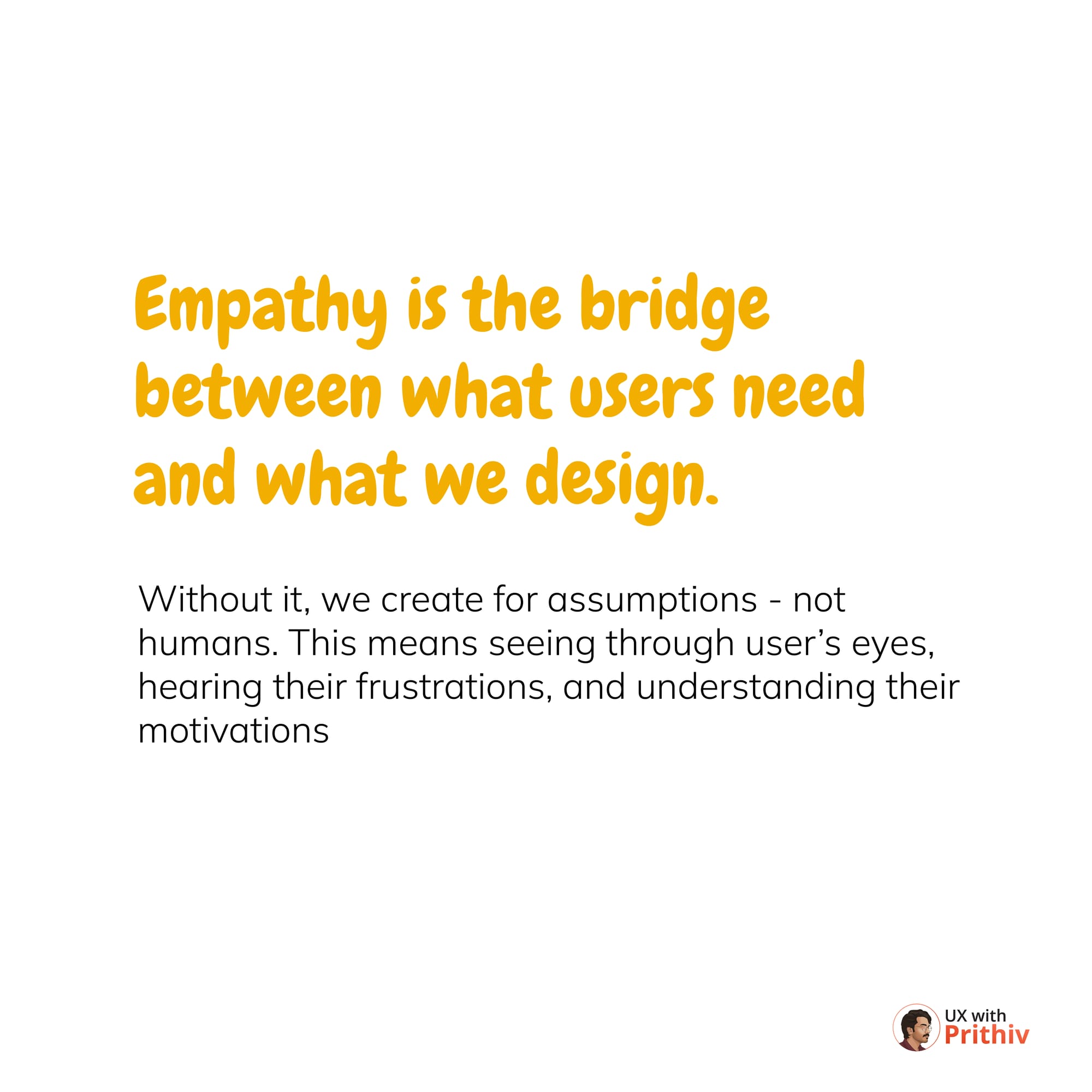
In the vast toolkit of a UI/UX designer, one skill transcends wireframes, prototypes, and code: Empathy. If the goal of design is to solve human problems, empathy is the essential bridge that connects what users genuinely need with what we ultimately create.
Without this superpower, we are merely designing for our own assumptions—not for real human struggles and motivations.
Why Empathy Is Your Design Superpower
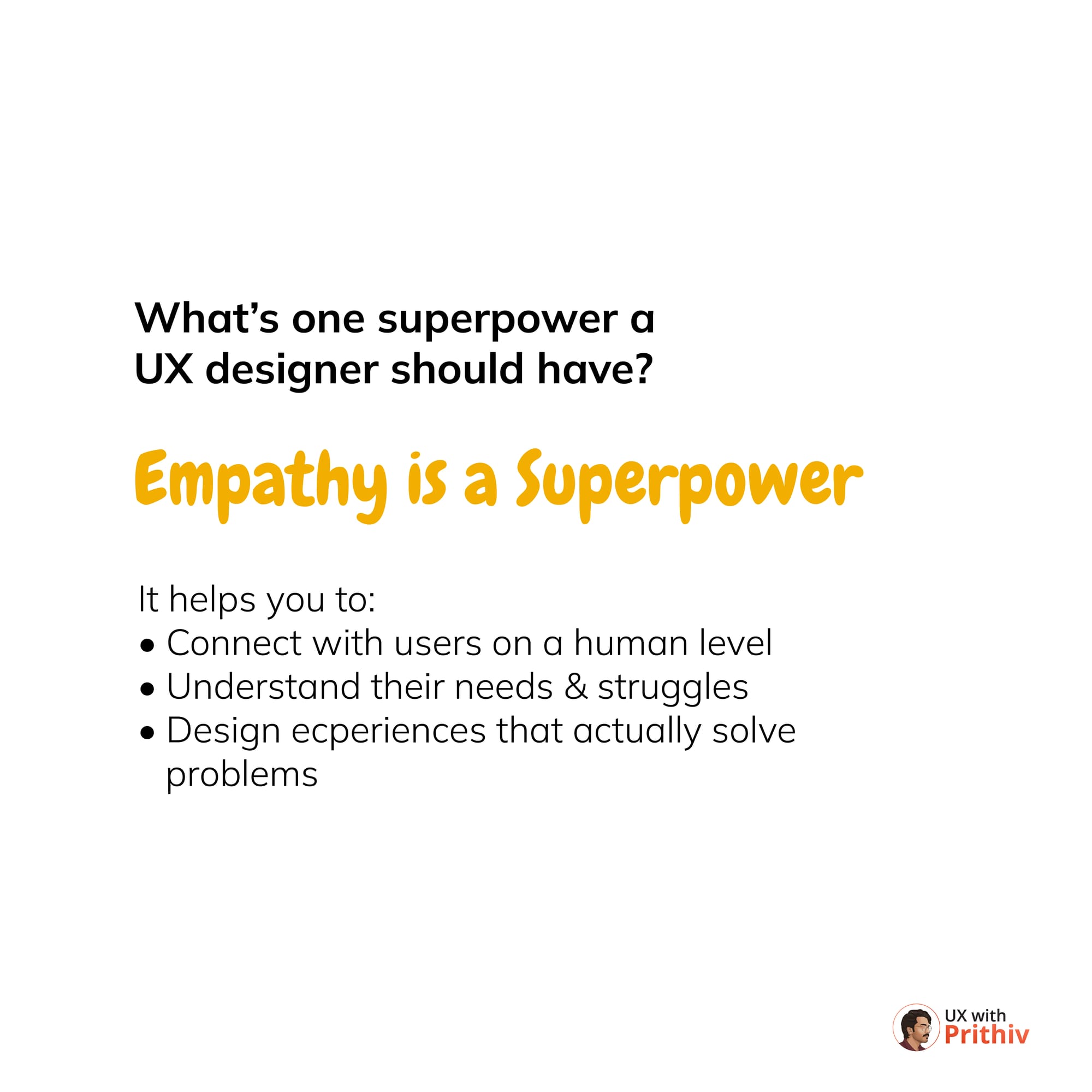
Empathy is what turns a visually appealing interface into a genuinely useful product. It helps you to:
- Connect on a Human Level: Move past demographic data to understand the person behind the screen.
- Understand Needs & Struggles: See the friction points and confusion in their journey from their perspective.
- Design Solutions That Matter: Create experiences that don't just look good, but fundamentally solve the problems that plague your users.
Empathy Must Precede Design
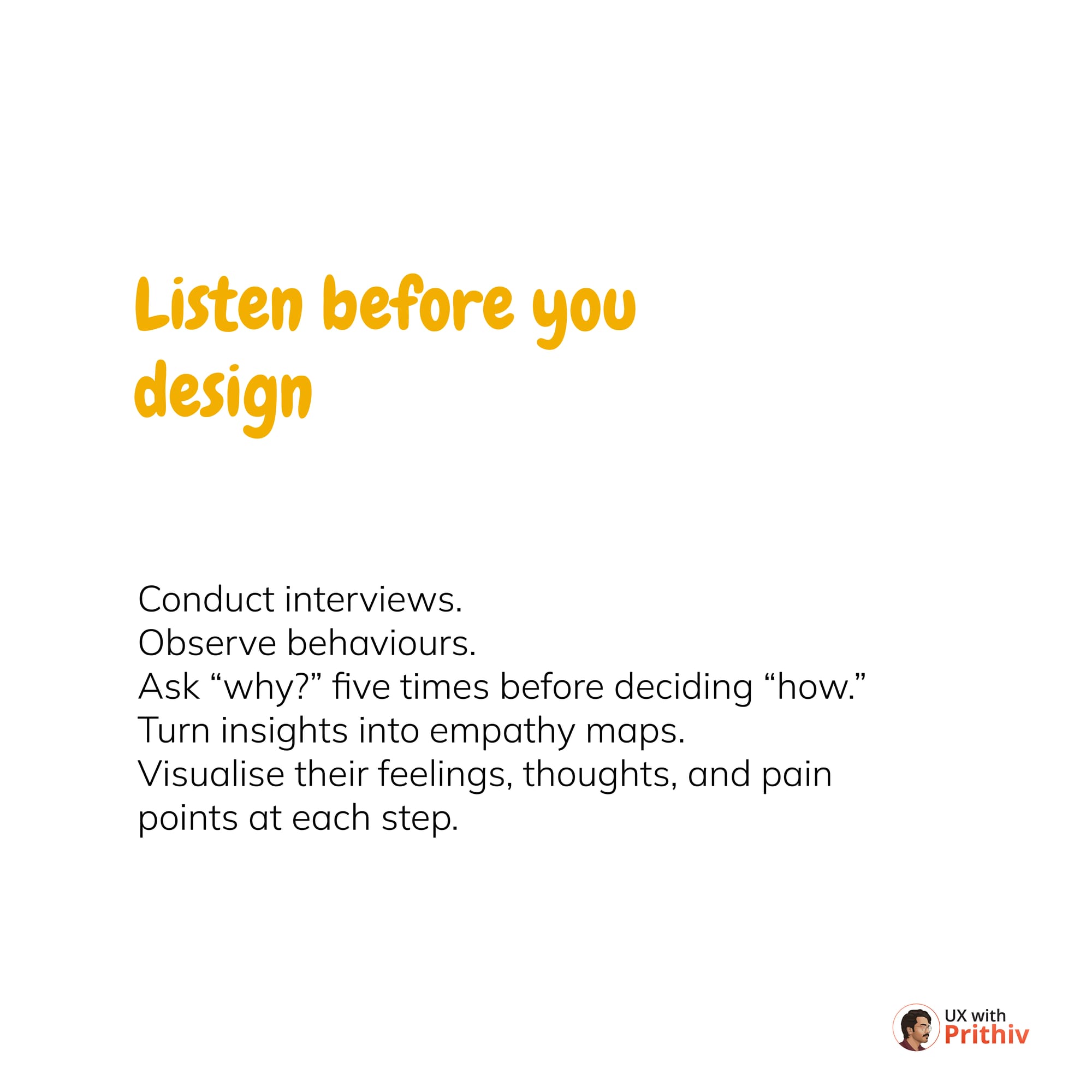
The core rule of empathetic design is simple: Listen before you design.
- Conduct Interviews: Talk to real users about their experiences, workflows, and emotions.
- Observe Behaviors: Don't just trust what they say; watch what they do. Behavioral data often reveals true pain points that interviews miss.
- Ask "Why?" Five Times: Before deciding "how" to implement a solution, drill down to the root cause of a problem. This technique prevents shallow feature building.
- Visualize Pain Points (Empathy Maps): Use tools like Empathy Maps to visualize their feelings, thoughts, and pain points at each step of the journey. This makes the user's experience tangible and shareable across the team.
Empathy is a Habit, Not a Phase
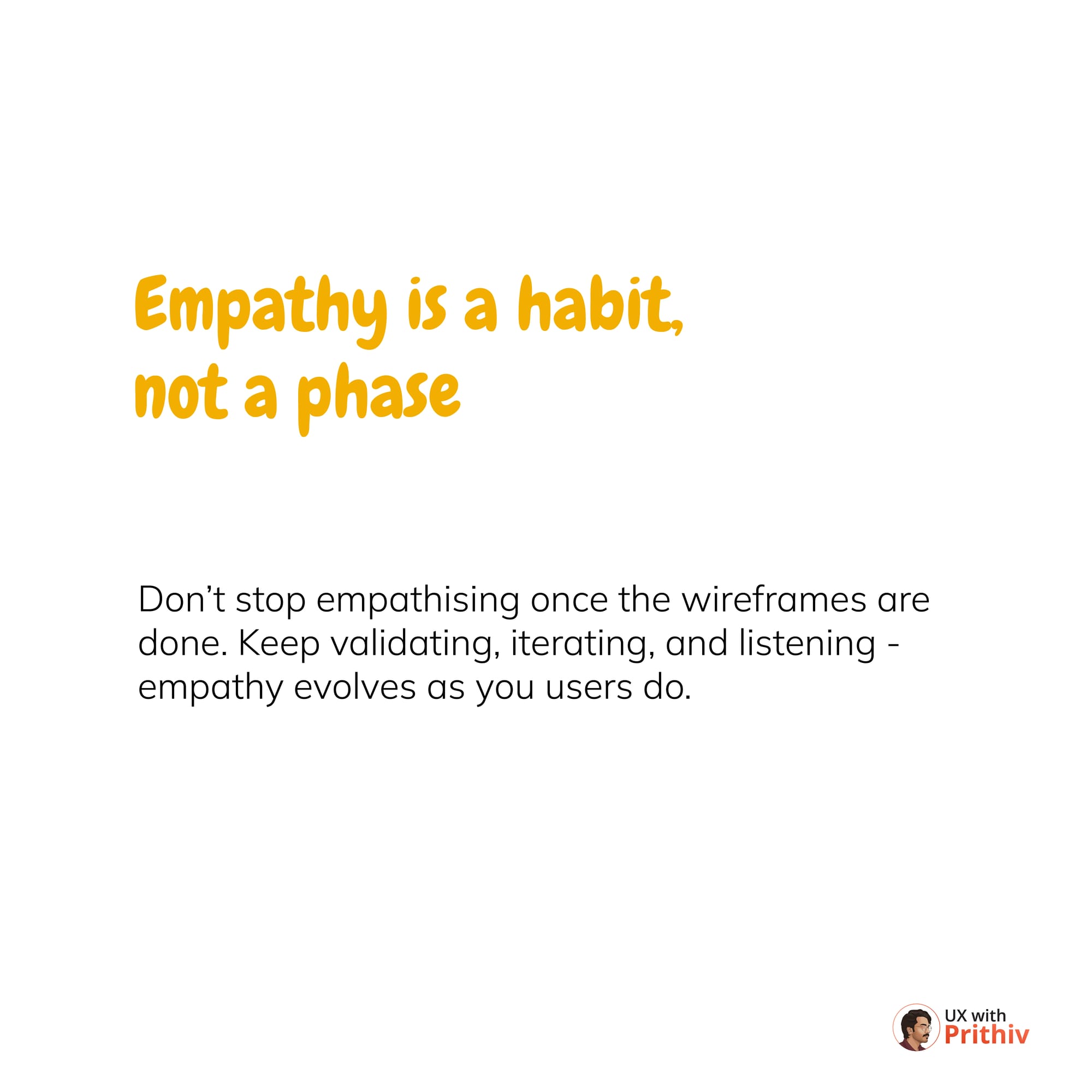
The practice of empathy cannot stop once the first wireframes are approved. It must be a continuous cycle:
- Keep Validating: Don't assume the solution works; continuously test prototypes and live features.
- Keep Iterating: Be ready to change your design based on new insights.
- Keep Listening: User needs and motivations evolve, and your empathy must evolve with them.
By embedding empathy into every stage of the design process, you shift from being a pixel pusher to a true problem solver.


Comments