


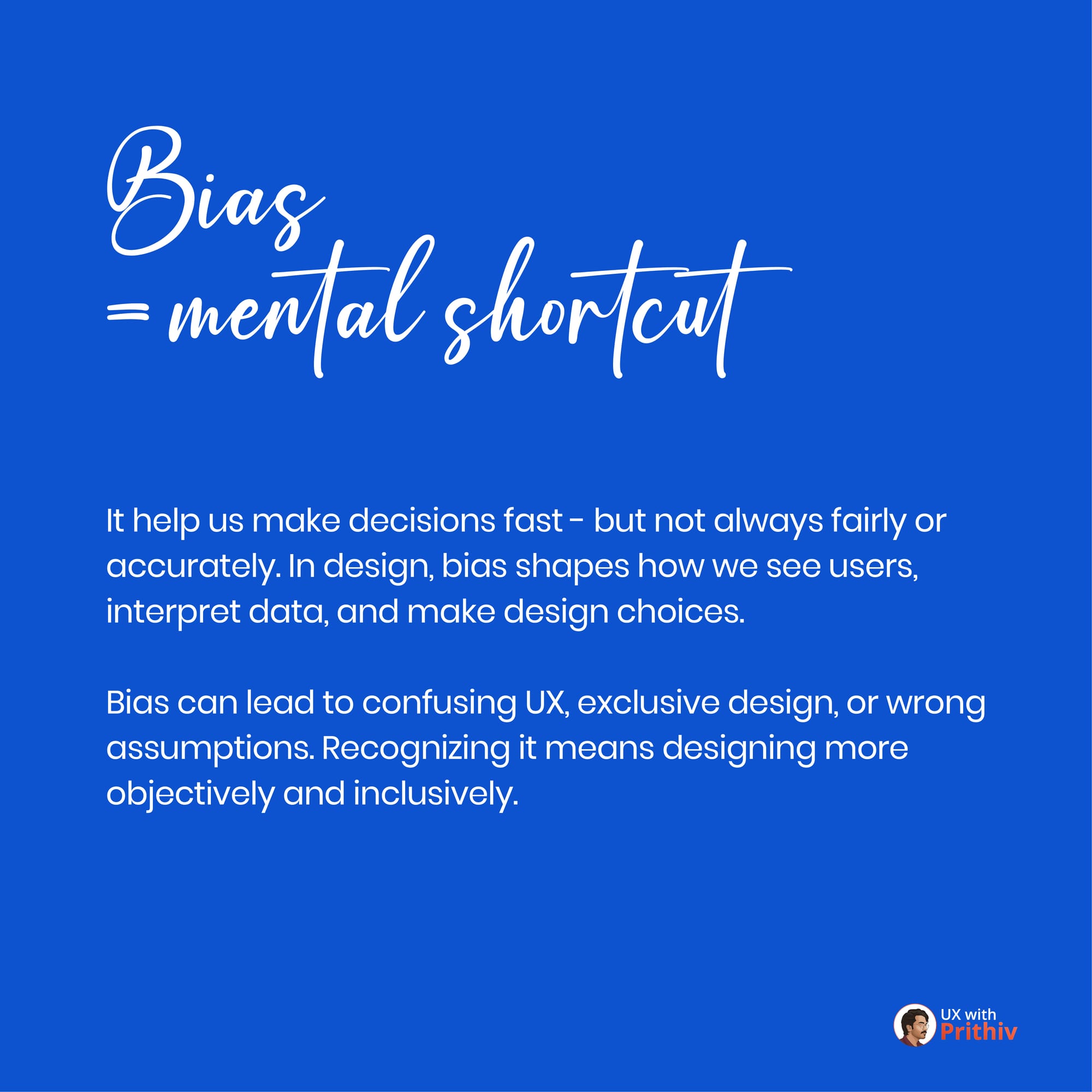
As designers, we are constantly making decisions—from choosing a font weight to defining an entire user flow. We aim for objectivity, but the human mind is wired with biases—mental shortcuts that help us make rapid decisions, often at the expense of fairness or accuracy.
In design, unexamined biases can lead to confusing experiences, exclusionary features, and the failure to solve the real problem. True design maturity lies in recognising these biases and deliberately designing around them.
Four Critical Biases Every Designer Must Recognize
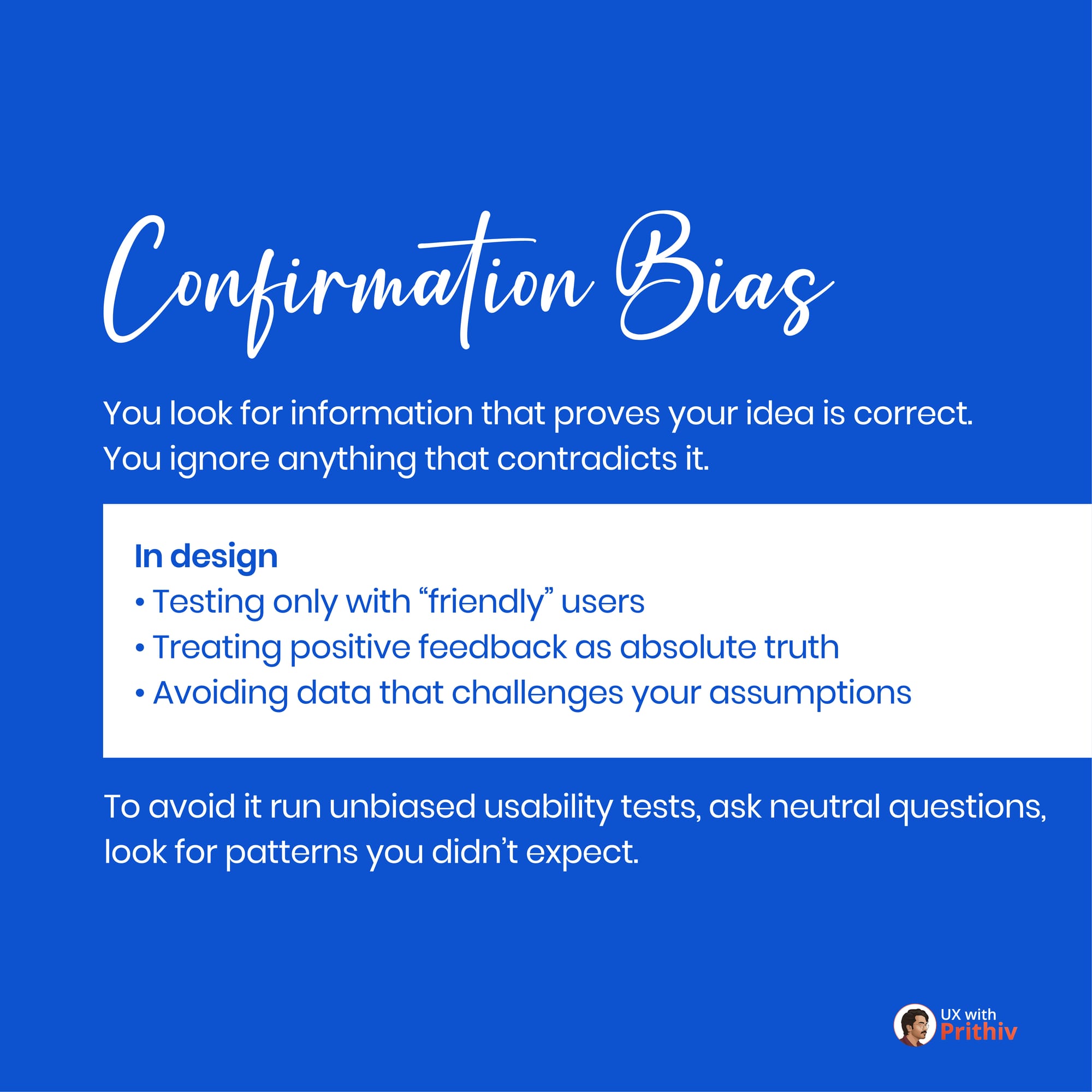
1. Confirmation Bias (The Sin of Seeking Validation)
- The Trap: You seek out or interpret evidence that supports your existing design idea and ignore data that contradicts it.
- In Design: Testing only with "friendly users," treating positive feedback as absolute truth, or avoiding a usability test result that challenges your cherished assumption.
- The Fix: Run unbiased usability tests. Ask open-ended, neutral questions. Actively look for unexpected patterns or negative feedback.
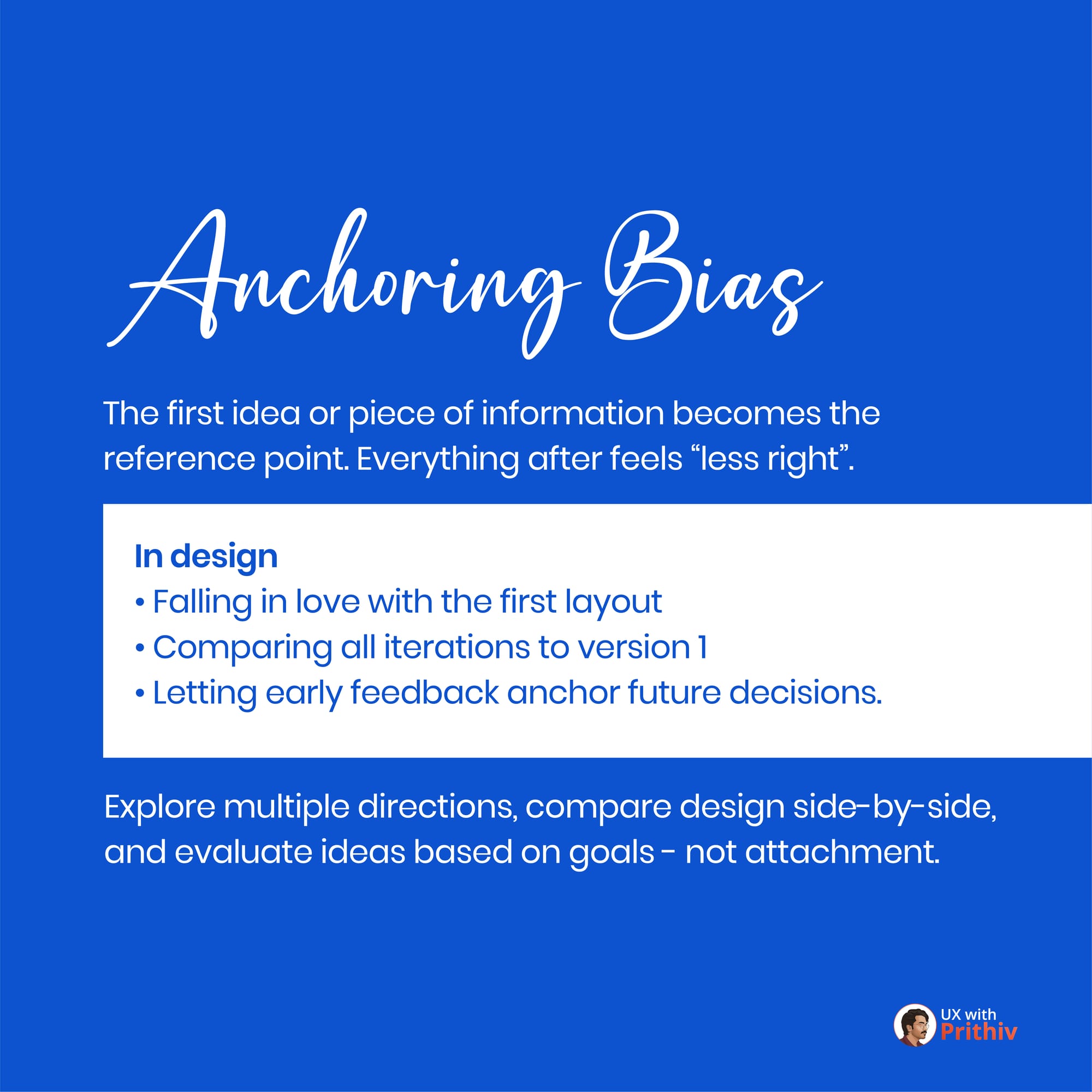
2. Anchoring Bias (The Trap of First Impressions)
- The Trap: The very first idea or piece of information you encounter becomes the reference point, and everything else is judged against it.
- In Design: Falling in love with the first layout, comparing all subsequent iterations only to Version 1, or letting early stakeholder feedback anchor all future decisions.
- The Fix: Explore multiple design directions before committing. Compare designs side-by-side based purely on user outcomes and project goals, not attachment.
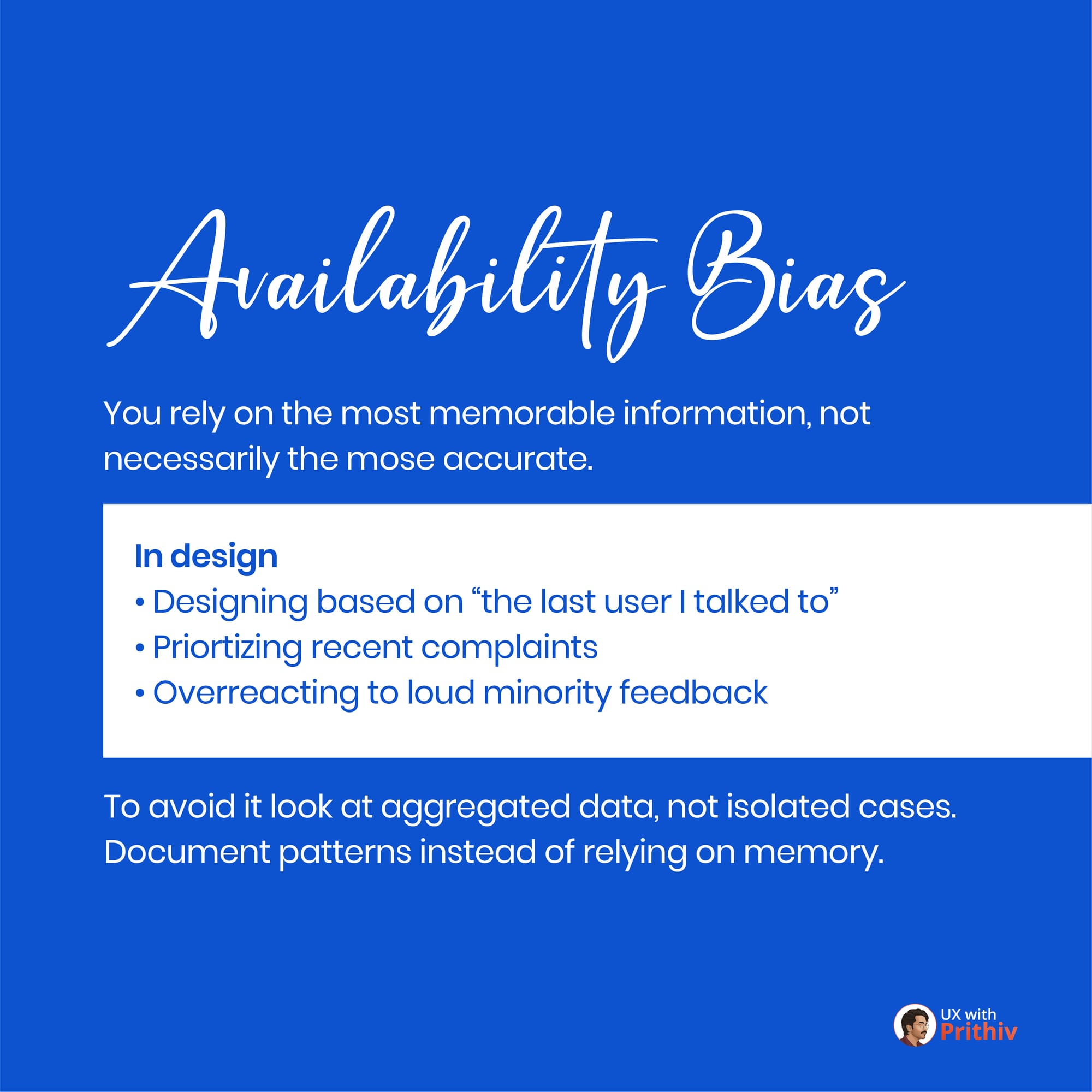
3. Availability Bias (The Trap of Memorable Moments)
- The Trap: You rely on the most memorable or recently-experienced information, even if it's not the most statistically accurate or common.
- In Design: Designing based on "the last user I talked to," overreacting to a single, loud minority complaint, or prioritizing recent data over long-term trends.
- The Fix: Look at aggregated, long-term data (analytics, support tickets), not isolated cases. Document patterns and findings, rather than relying on gut feeling or memory.
4. Aesthetic Bias (The Trap of Beauty Over Brains)
- The Trap: We assume that "beautiful" automatically equals "usable". Pretty designs feel better—even when they function poorly.
- In Design: Overestimating a polished UI, ignoring clear UX issues because the visuals are strong, or choosing looks over clarity and accessibility.
- The Fix: Validate the function with usability tests, not just aesthetics. Remember the mantra: Function first, aesthetics polish.
Designing Around Bias
You can't remove bias, but you can design around it. Use these strategies to introduce objectivity into your workflow:
- Test with diverse users.
- Ask neutral questions in research.
- Use real data to drive decisions, not assumptions.
- Document every design decision and the evidence that supports it.


Comments