


A common mistake designers make is treating all UX as interchangeable. The reality is that B2C (Business-to-Consumer) and B2B (Business-to-Business) design are two different disciplines. If you are applying for a B2B role with a portfolio full of B2C e-commerce apps, you're missing the mark.
A high-impact portfolio proves you understand the specific context, users, and constraints of your target sector.
1. The Core Challenge: Conversion vs. Efficiency
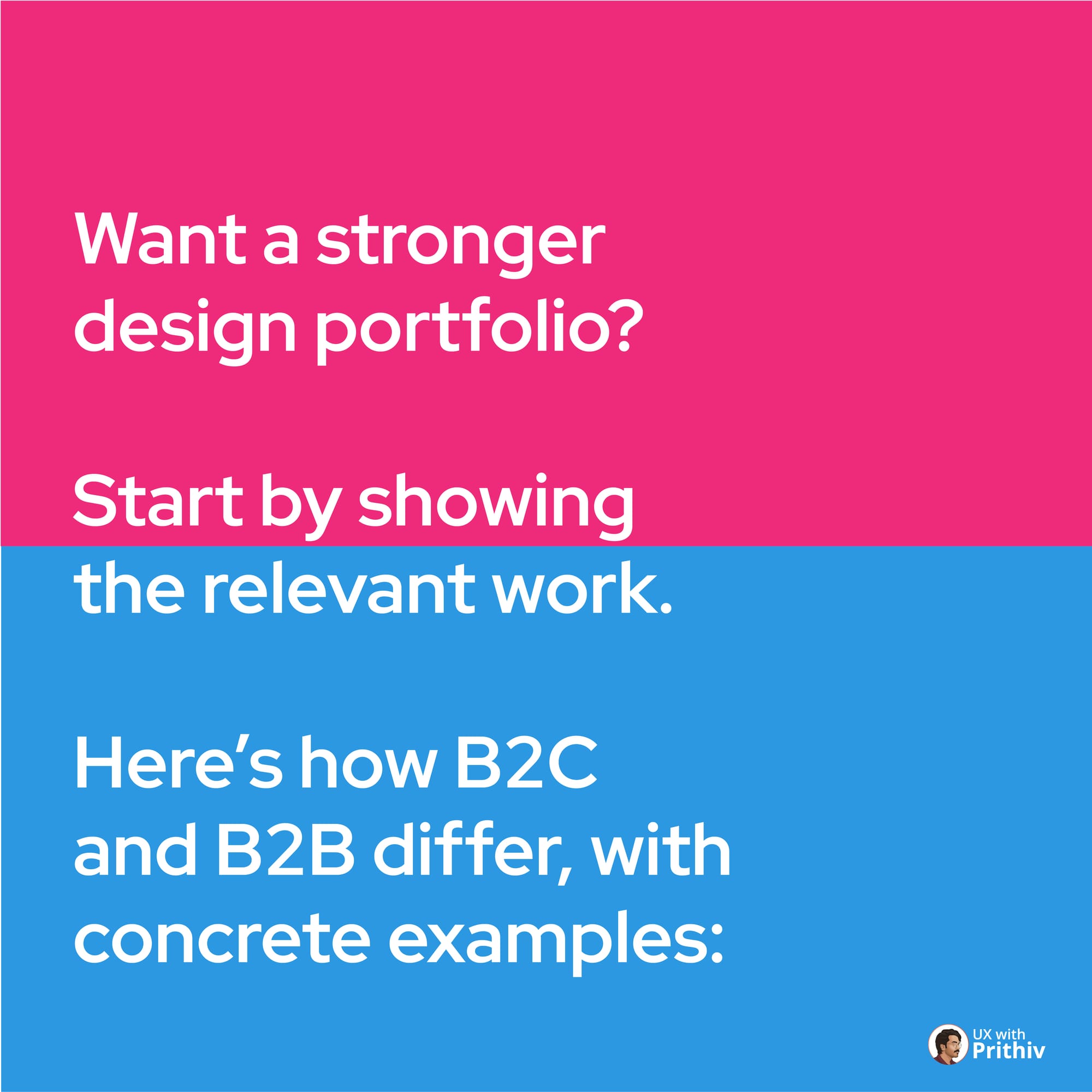
- B2C: The goal is often conversion and rapid user acquisition. Design focuses on simple, engaging flows (like mobile onboarding) to guide large, general audiences to a small, emotional decision (e.g., buying a product, signing up).
- B2B: The goal is almost always efficiency and reliability. B2B users are at work and need to complete complex, multi-step workflows accurately and fast. The design challenge is reducing friction in processes like "cumbersome paperwork" or "multi-step approvals".
2. User Motivation: Delight vs. Domain Specificity
- B2C Users are driven by emotion and delight. Designs can use gamification (like badges or rewards) and visual flair to build habit and loyalty. Decisions are rapid, tied to a small dollar value.
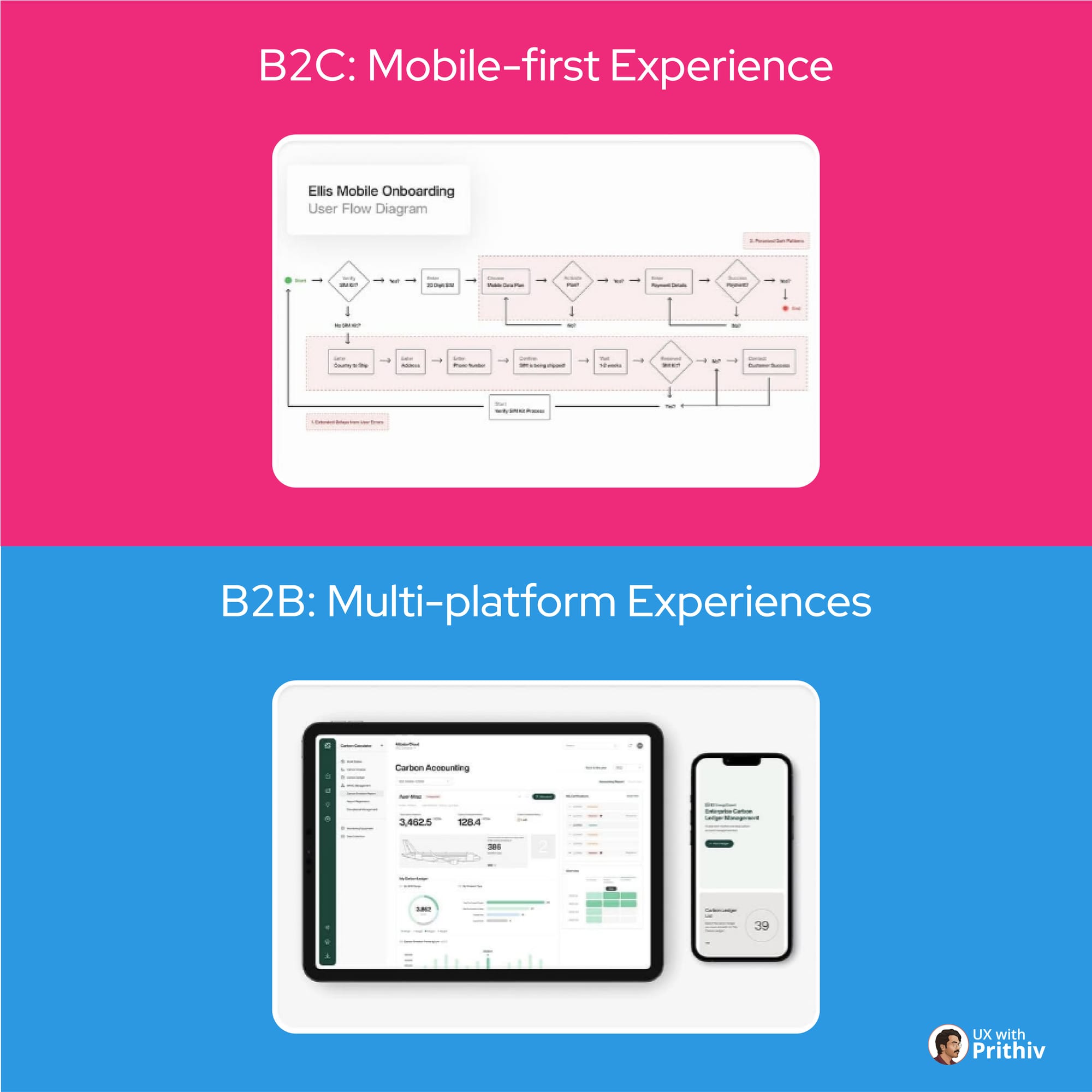
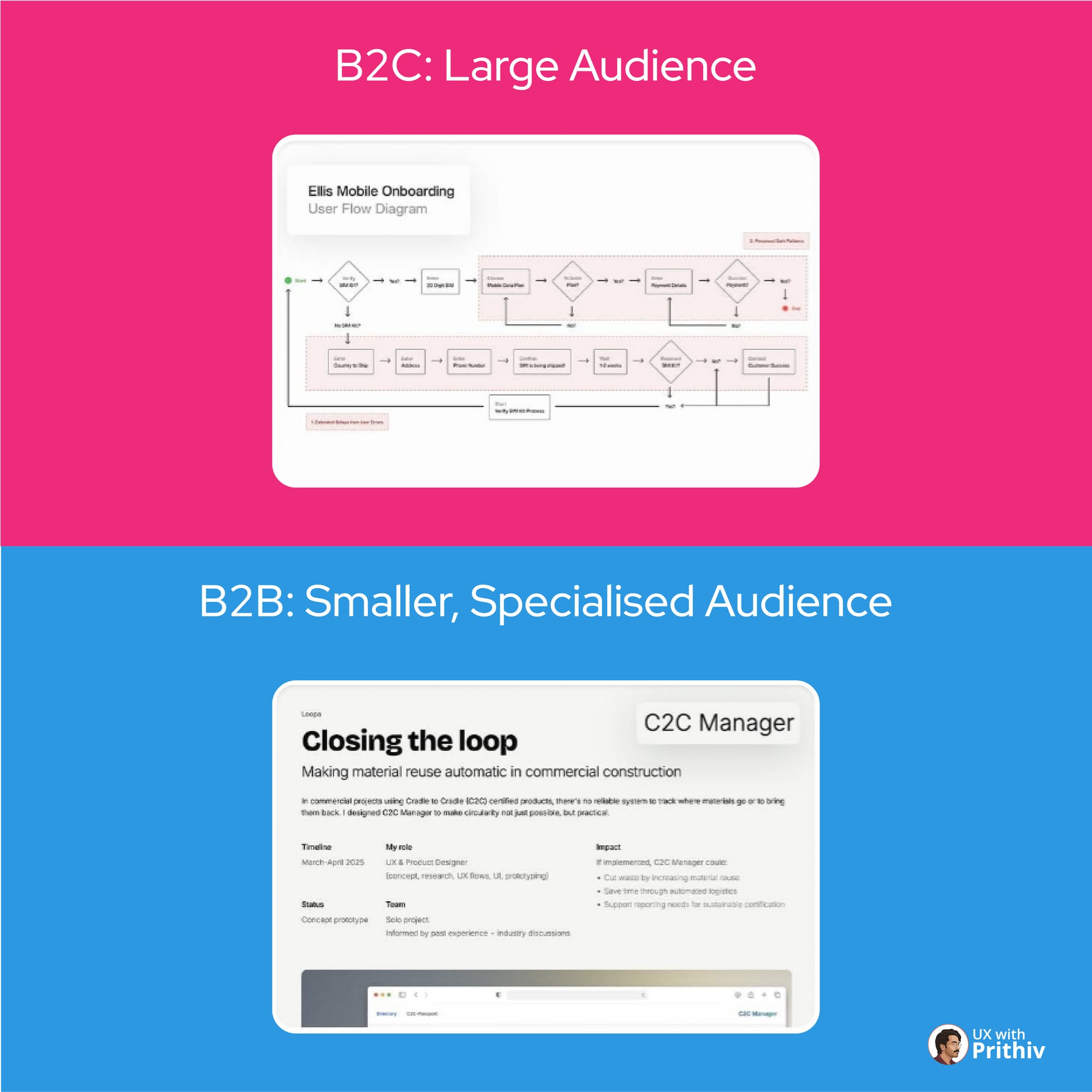
- B2B Users are driven by accuracy and domain knowledge. Your users might be specialized roles—Architects, Contractors, or Building Managers. They need a tool that is robust, accurate, and speaks the industry's language. Decisions are slow, consultative, and tied to large business outcomes.
3. The Design Output: Simplicity vs. Complexity
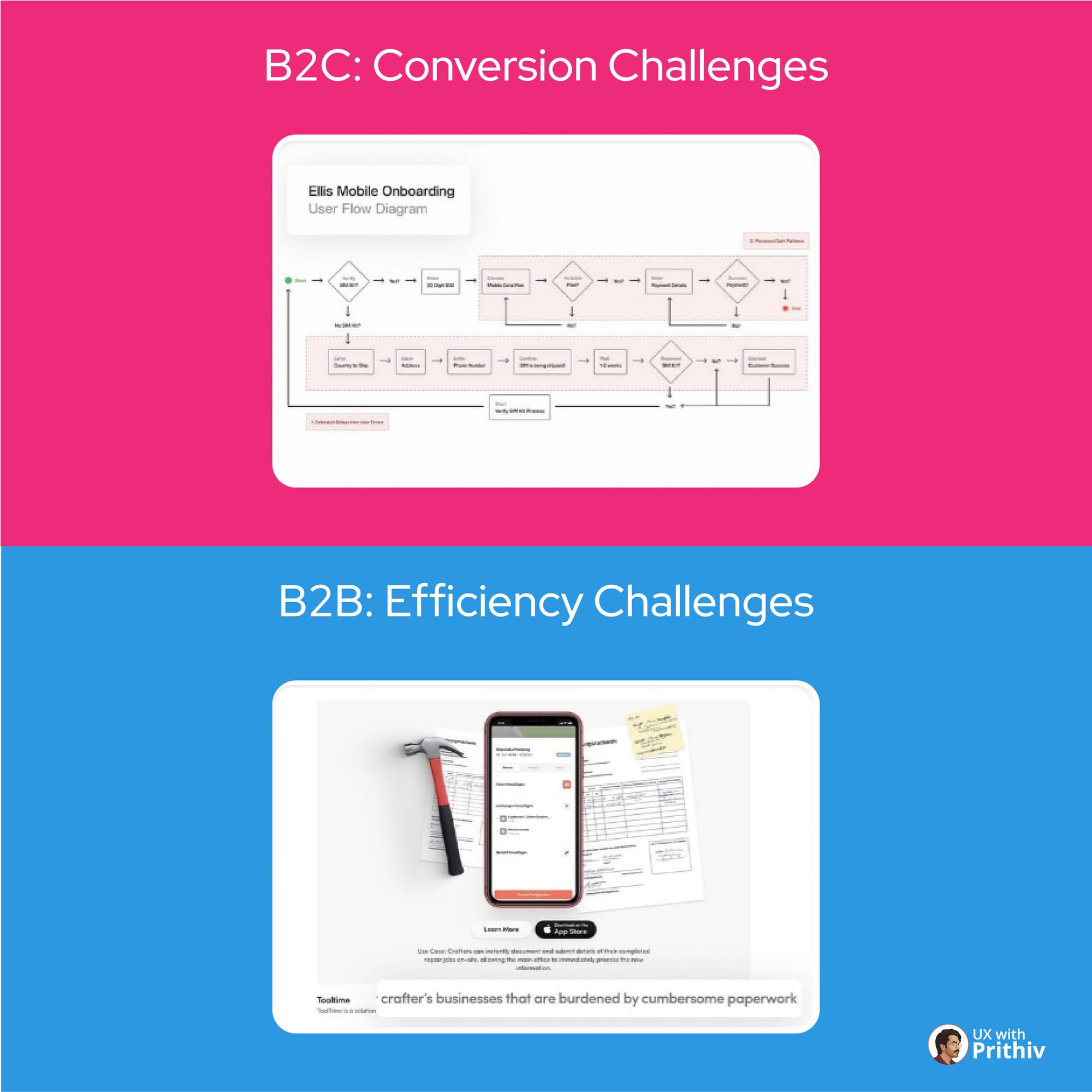
- B2C Focus: Typically a Mobile-first experience with simple flows and an emphasis on visual aesthetics (look and feel).
- B2B Focus: Often a Multi-platform experience dominated by complex, data-heavy interfaces like forms, filters, data tables, and dashboards. The design must handle edge cases, error states, and high data density, often on a desktop monitor.
Conclusion: Tailor Your Narrative
Don't just show beautiful screens; show you understand the system.
If you are pursuing B2B, your case studies must highlight:
- How you simplified a multi-step workflow.
- How you handled complex data display (tables, charts).
- How your design choice drove ROI or saved time/money for a business.
If you are pursuing B2C, highlight:
- Your mobile-first proficiency.
- How you maximised conversion through simple, engaging flows.
- The use of psychology/emotion to drive action.
Prove you know the rules of the game you want to play.


Comments