


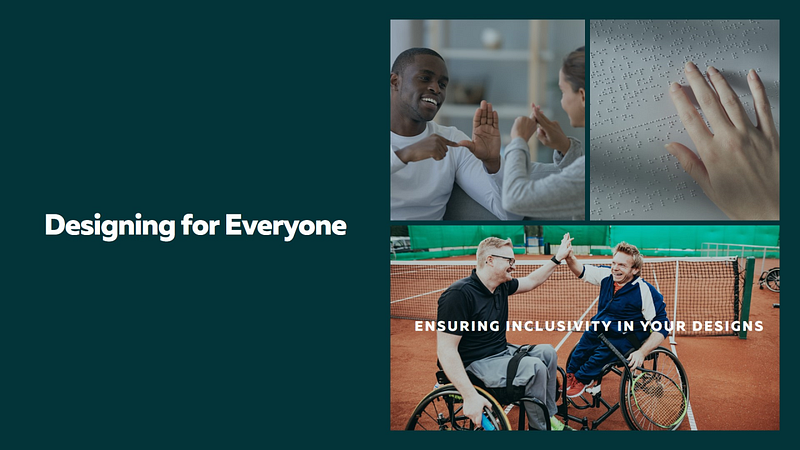
In today’s digital world, it’s imperative that websites and applications are accessible to everyone, regardless of their abilities.
Accessibility testing ensures that your designs are usable by people with disabilities, such as visual impairments, hearing loss, motor difficulties, or cognitive impairments.
By prioritizing accessibility, you can create inclusive digital experiences that cater to a wider audience.
Key Points
- Understanding Accessibility Standards: Familiarise yourself with accessibility guidelines like WCAG (Web Content Accessibility Guidelines) to ensure your designs meet industry standards.
- Learn about assistive technologies used by people with disabilities, such as screen readers, keyboard navigation, and speech-to-text software.
- Conducting Accessibility Audits:Regularly assess your website or app for accessibility issues.Use automated tools to identify potential problems, but remember that manual testing is essential for comprehensive evaluation.
- Focus on areas like colour contrast, alternative text for images, keyboard navigation, and clear labelling.
- Involving People with Disabilities:Get feedback from individuals with disabilities to gain insights into their experiences.Consider conducting user testing sessions with people who use assistive technologies.
- Accessibility Best Practices: Prioritise clear and concise language.Use consistent and logical navigation.Ensure compatibility with assistive technologies.
- Provide alternative text for images and multimedia content.Consider using ARIA (Accessible Rich Internet Applications) attributes to enhance accessibility.
- Accessibility in Design:Incorporate accessibility into the design process from the beginning.Choose colour palettes with sufficient contrast.Use fonts that are easy to read.Avoid overly complex layouts.
- Accessibility is a continuous process: Regularly review and update your designs to ensure they remain accessible.
- Consider accessibility certifications: Explore certifications like WCAG Level AA or AAA to demonstrate your commitment to accessibility.
- Educate your team: Train your team members on accessibility principles and best practices.


Comments